Saffron Walden 1647 Sculpture
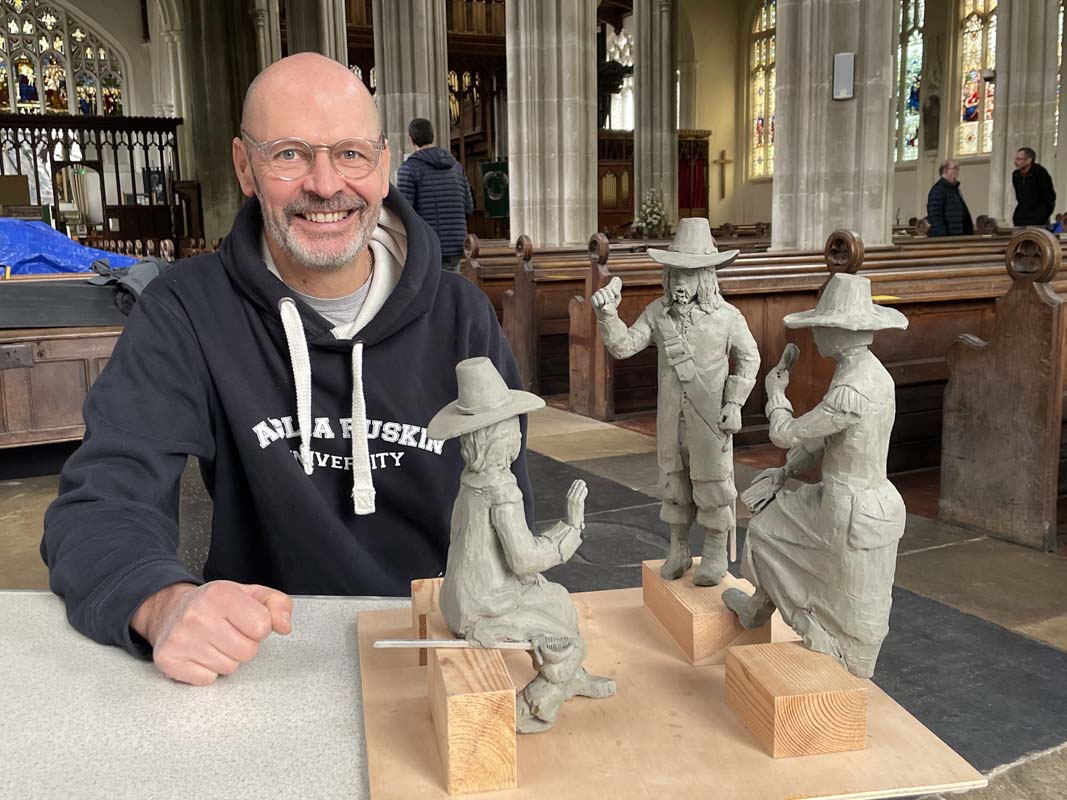 Saffron Walden Heritage Development Group is engaged in the commissioning of a sculpture celebrating Saffron Walden's unique role in the development of representative democracy. In Saffron Walden during the Spring of 1647, elected 'agitators' were raised from the ranks of the Parliamentary Army that had defeated the King during the English Civil War. Some agitators became politically active.
The sculptor Ian Wolter, known for the Children of Calais', 'Kindertransport' and recently the 'Great Bardfield Artists' has drawn up a unique design for a permanent setting in Saffron Walden. Image shows Ian Wolter with the maquette of the proposed sculture.
In Saffron Walden during the Spring of 1647, elected 'agitators' were raised from the ranks of the Parliamentary Army that had defeated the King during the English Civil War. They joined 'Debates held in Saffron Walden Church on 15 and 16 May 1647'.
Historian, Author and Prof John Morrill a Patron of Saffron Walden 1647, goes on to say, 'These mark the first stage of the debates on democracy, the nature and limits of religious freedom and on the right of the whole army – common soldiers as well officers – to speak out about the way the cause they had all put their lives on the line for was being betrayed by politicians in Parliament. These debates were to culminate in the autumn of 1647 in the much more famous debates at Putney, but the process of radicalisation and democratisation began back in May in Saffron Walden and these debates and events around them need to be better commemorated and understood as a neglected but really significant moment in the development of the precocious English concept of liberty.'